Latrine trench and camp hygiene rule
downhill and away from water
AWhat it needs
Needs 8 other products in all, 3 of them directly.
- 01.21 Latrine trench and camp hygiene ruleHome Year 1 needs 8 products
- 01.04 Digging stickMaking Year 1 needs 2 products
- 01.03 Sharp stone flakeMaking Year 1 needs 1 product
- 01.02 HammerstoneMaking Year 1 raw materials only
- 01.08 First fire and stone hearthMaking Year 1 needs 5 products
- 01.06 Tinder and kindling storeMaking Year 1 raw materials only
- 01.07 Bow-drill fire setMaking Year 1 needs 3 products
- 01.03 Sharp stone flakeshown above ↑← shown at left
- 01.05 Twisted plant-fibre cordMaking Year 1 needs 2 products
- 01.12 Bamboo cups and water tubesMaking Year 1 needs 2 products
Open a box to see what it needs. A dashed box is a product already drawn in full: click it to jump there. In the org chart, drag to move around.
BWhy
More camps have been destroyed by their own waste than by hunger or wild animals. Sickness of the bowels passes from waste to water, hands and flies, and then to food. One trench in the right place, and washed hands, break that chain.
CYou need
DSteps
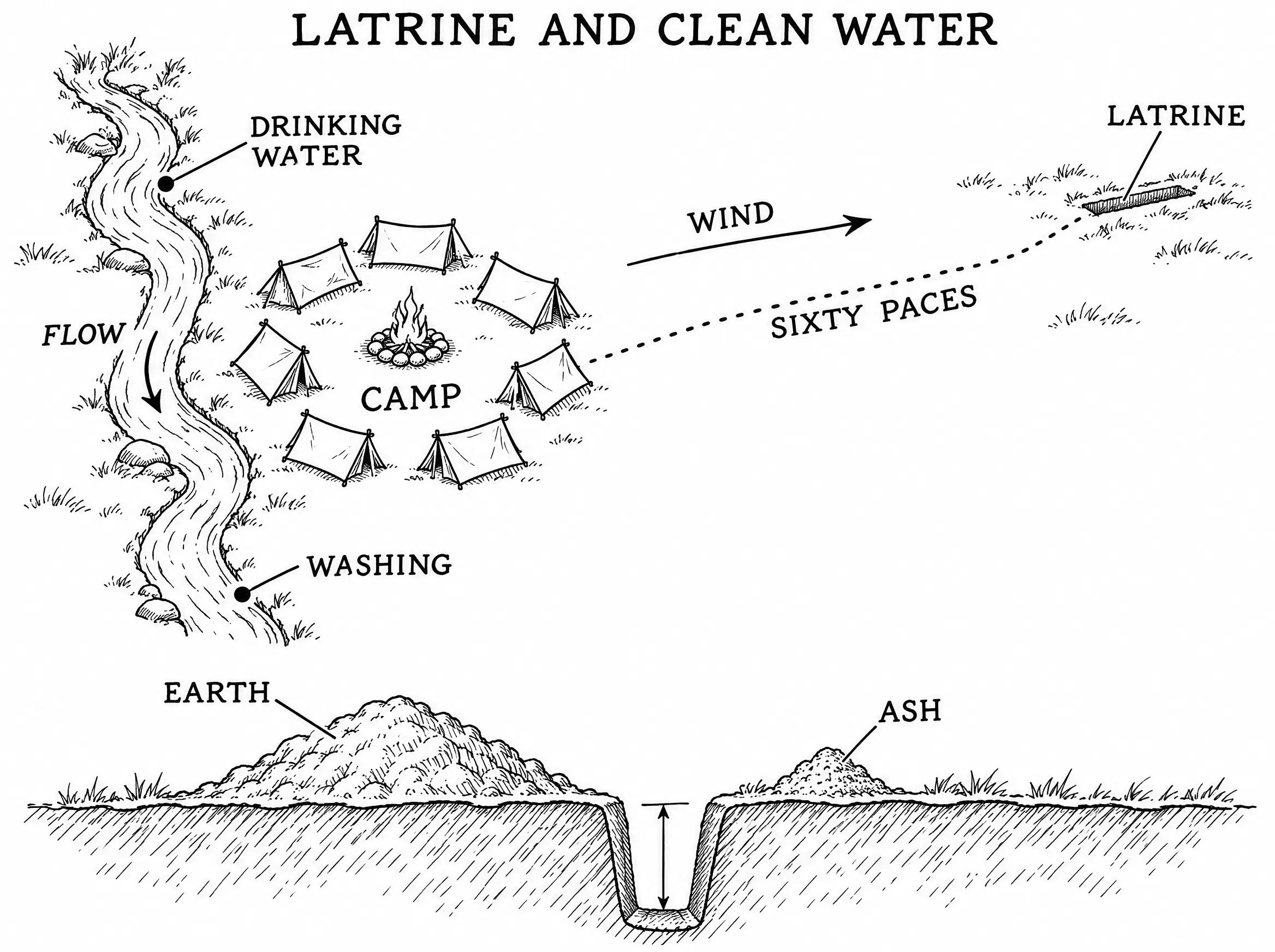
- Choose the place: downhill from the camp, downwind of it, and at least sixty paces from the stream, the spring and the kitchen. Not in any gully that drains toward the water.
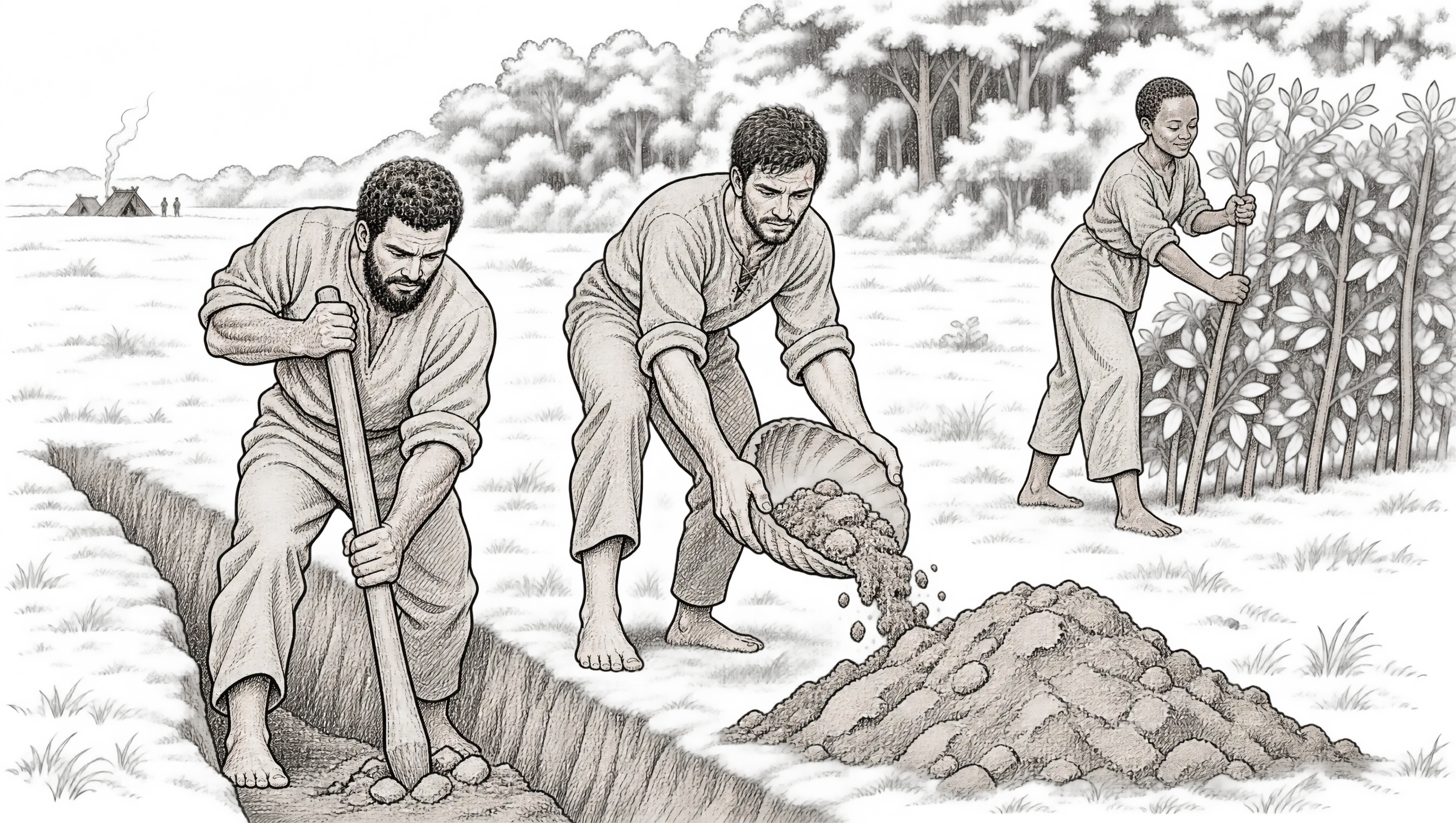
- Dig a trench one foot wide, as deep as from the ground to the hip, and two body lengths long. Pile the earth along one side.
- To use it, stand with one foot on each side.
- After every use, push in enough of the piled earth to cover what was left, and throw a handful of ash on top. This keeps flies off and kills the smell.
- Build a brushwood screen round it, with the opening facing away from the camp.
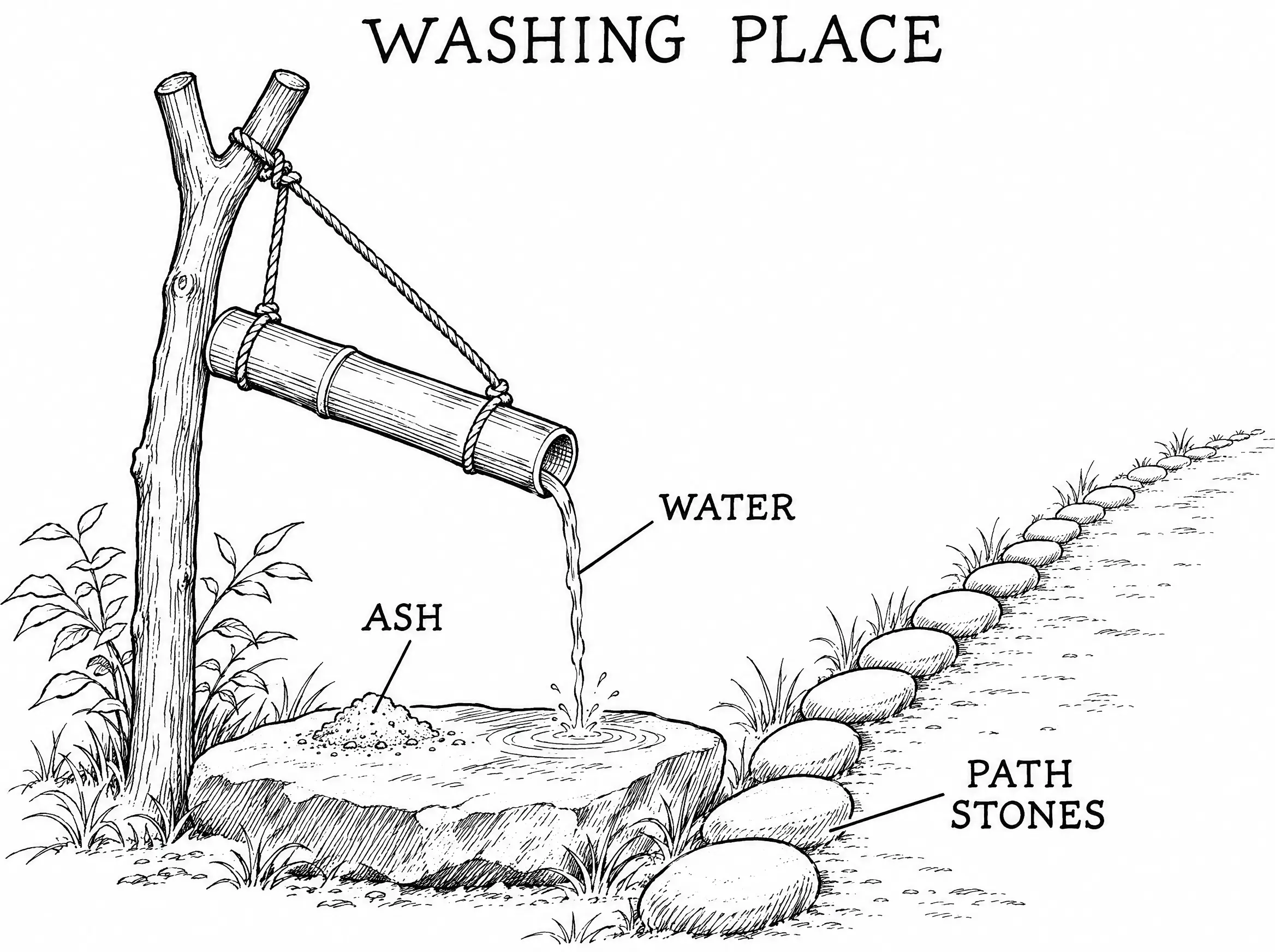
- Set a washing place on the path back: a bamboo tube of water hung at an angle, and a heap of ash. Wet the hands, scrub them with ash, and rinse. Every time, no exceptions.
- When the trench is filled to within a forearm of the top, fill it in completely, heap earth over it, mark it with a stone, and dig a new one a few paces away.
- Agree the rest of the rule in council: drinking water is taken upstream of everything; washing of bodies and food is done downstream; hands are washed before touching food; nobody relieves themselves anywhere but the trench.
EIt worked if
- There is no smell at ten paces and few flies.
- A week on, nobody has a sickness of the bowels that can be traced to the camp.
FWhat goes wrong
- People go behind the nearest bush at night. It is too far or too dark. Mark the path with pale stones and keep a torch at the camp end.
- Flies. Waste is not being covered. Leave a shell scoop stuck in the earth pile so there is no excuse.
- The trench floods. It is in a low spot. Move it to ground that drains away from the stream.
- The wash water runs out. Nobody owns the job. Put it on the daily rota.
GIn the story
Grace raises it on the second morning, before the fire, before the food, while people are still shy of each other. There is an embarrassed silence. Then Omar picks up his digging stick and says he would rather dig for an hour than be ill for a month. It is the first rule the council ever agrees.
HFigures