Phase 01 — First days: water, fire, shelter / About year 1
01.02
Hammerstone
the first tool; a fist-sized cobble for striking
AWhat it needs
No other product. It is made from raw materials alone.
BWhy
The hammerstone is the tool that makes the first cutting edge. It is not made, it is chosen, and choosing well matters.
CYou need
- A stream bed or stony beach with water-rounded cobbles
DSteps
- Look for cobbles the size of a fist, egg-shaped, smooth, with no cracks.
- Pick hard, tough stone: quartzite, basalt or granite. Reject sandstone and limestone, which crumble.
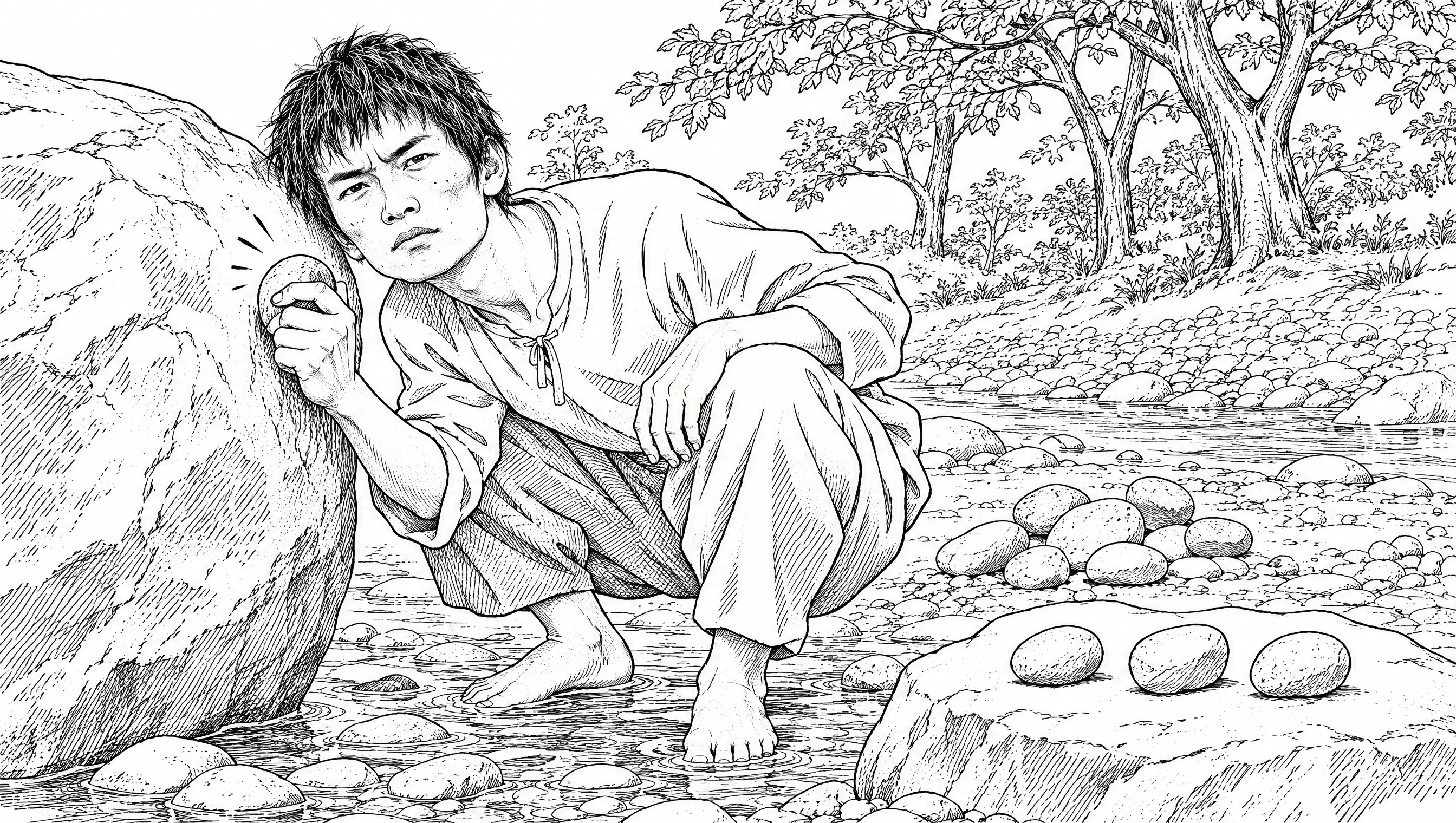
- Test each one. Knock it sharply against a bigger rock. A good hammerstone rings and stays whole. A bad one thuds, sheds grains or splits.
- Check the grip. It should sit in the palm with the fingers wrapped round and one rounded end free to strike.
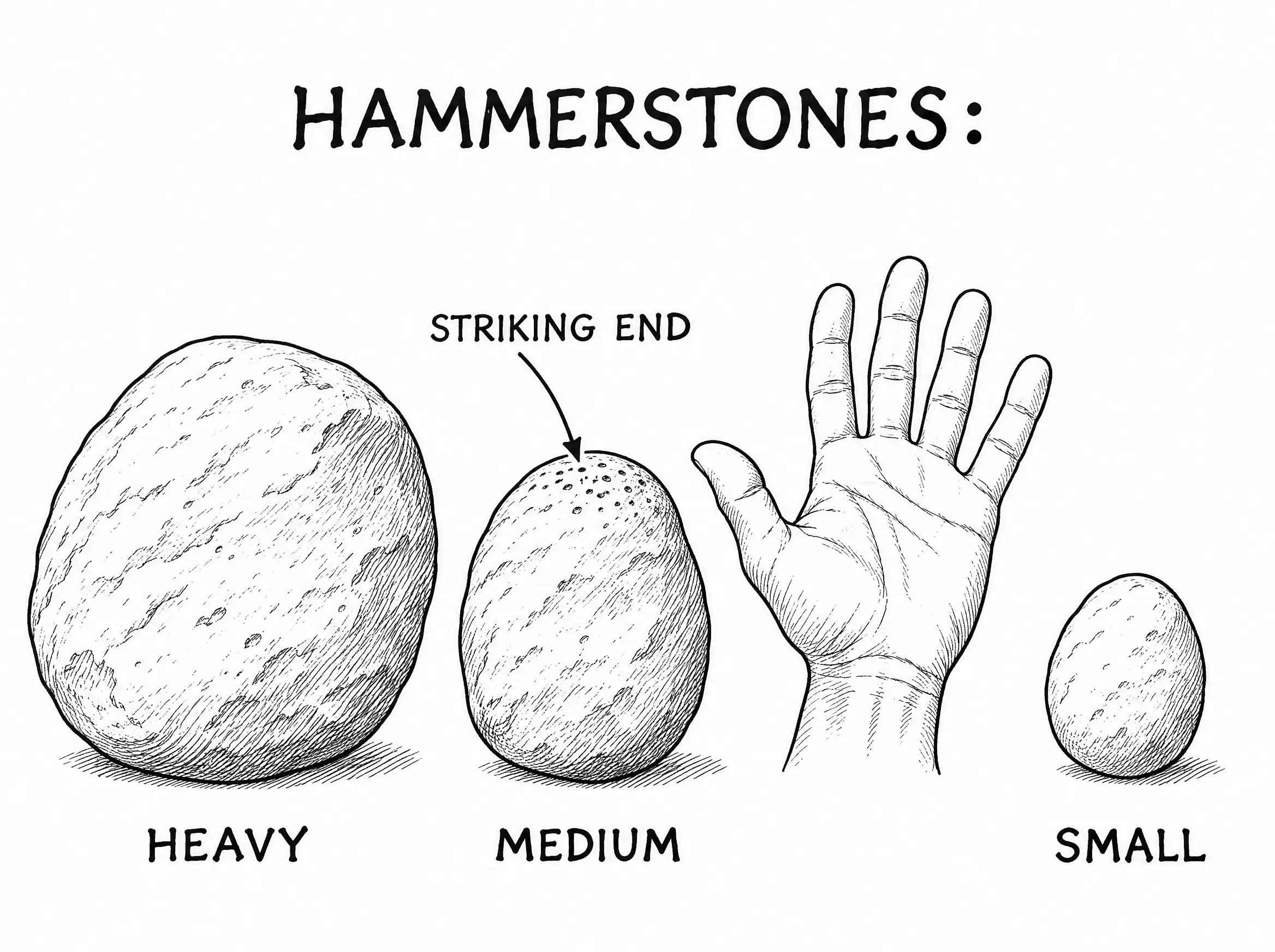
- Keep three: a heavy one (two fists) for breaking large stone, a medium one for striking flakes, and a small one (a hen's egg) for fine trimming.
- Strike with the rounded end only, and turn the stone as you work so it wears evenly.
EIt worked if
- After a morning of striking flint, the stone shows small white bruises but no chips or cracks.
FWhat goes wrong
- It shatters in the hand. It had a hidden crack. Always test against a rock first, and hold it away from the face.
- It is too light. The blow bounces and no flake comes off. Use a heavier stone, not a harder swing.
- It is too round to hold. Find a slightly flattened one; the thumb needs a place to rest.
GIn the story
Adam shows the knock test once. Hiro, who has made steel tools all his life and never touched a stone one, tests forty cobbles and keeps three. He is still carrying the same three a year later.
HFigures