Phase 01 — First days: water, fire, shelter / About year 1
01.05
Twisted plant-fibre cord
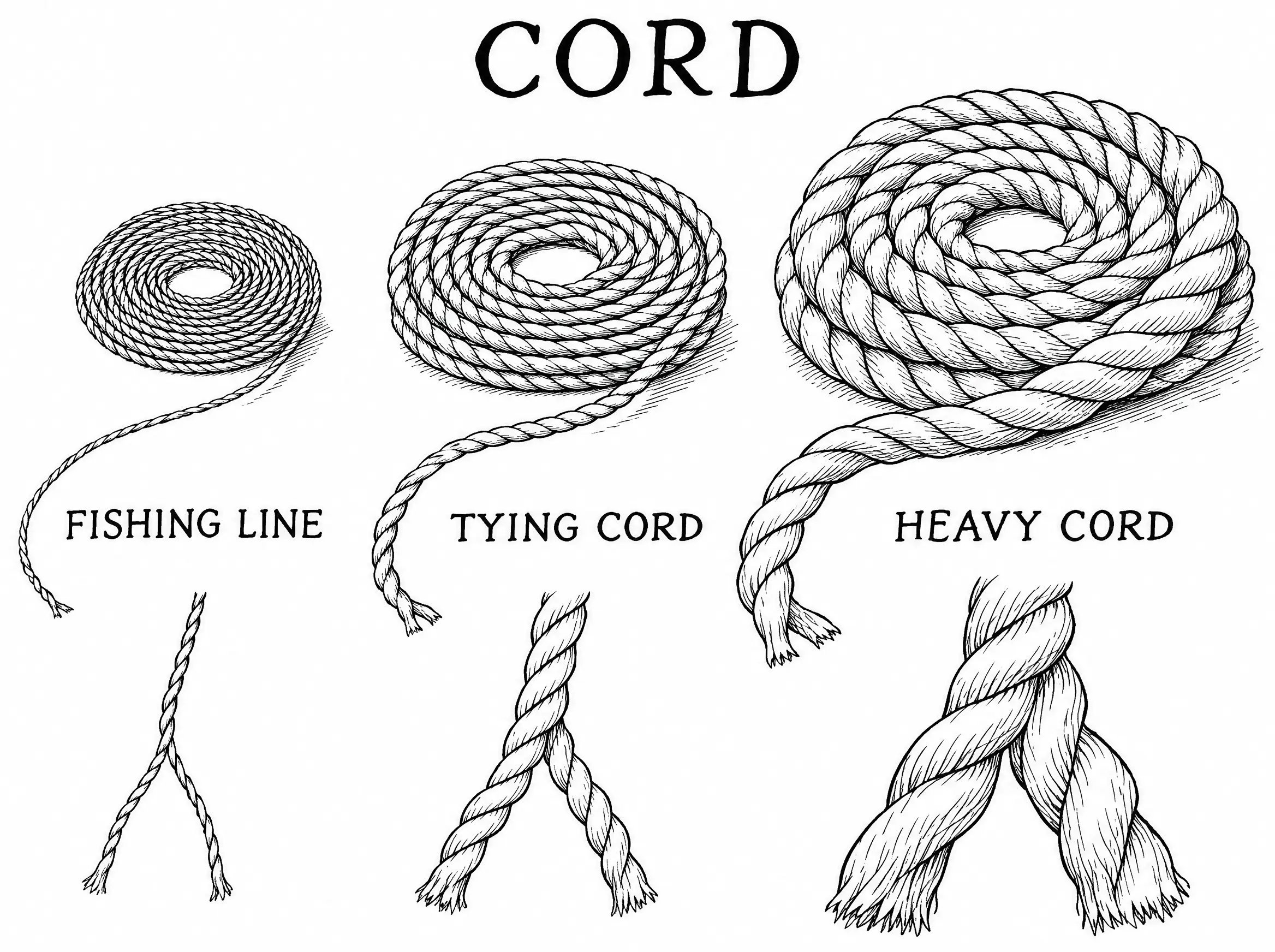
two-ply string for tying everything
AWhat it needs
Needs 2 other products in all, 1 of them directly.
View
- 01.05 Twisted plant-fibre cordMaking Year 1 needs 2 products
- 01.03 Sharp stone flakeMaking Year 1 needs 1 product
- 01.02 HammerstoneMaking Year 1 raw materials only
Open a box to see what it needs. A dashed box is a product already drawn in full: click it to jump there. In the org chart, drag to move around.
BWhy
Cord ties the shelter, strings the bow drill, binds every tool to its handle, and makes lines and nets. A camp never has enough of it.
CYou need
- Fibre: the inner bark of young lime, willow or hibiscus branches; dry nettle or milkweed stalks; long tough grass
- A stone flake (01.03)
- Water to keep the fibre damp
DSteps
- Bark fibre: cut a ring round a young branch at top and bottom, slit between the rings, and peel the bark off in one sheet. Pull the soft pale inner layer away from the rough outer skin and split it into ribbons.
- Stalk fibre: crush a dry stalk flat along its length, snap the woody core every finger-width, and peel the long fibres away from it.
- Take a bundle of damp fibre as thick as the cord you want. Fold it, not in the middle but a third of the way along, so the two legs are unequal.
- Pinch the fold between the left thumb and finger. You now hold two strands.
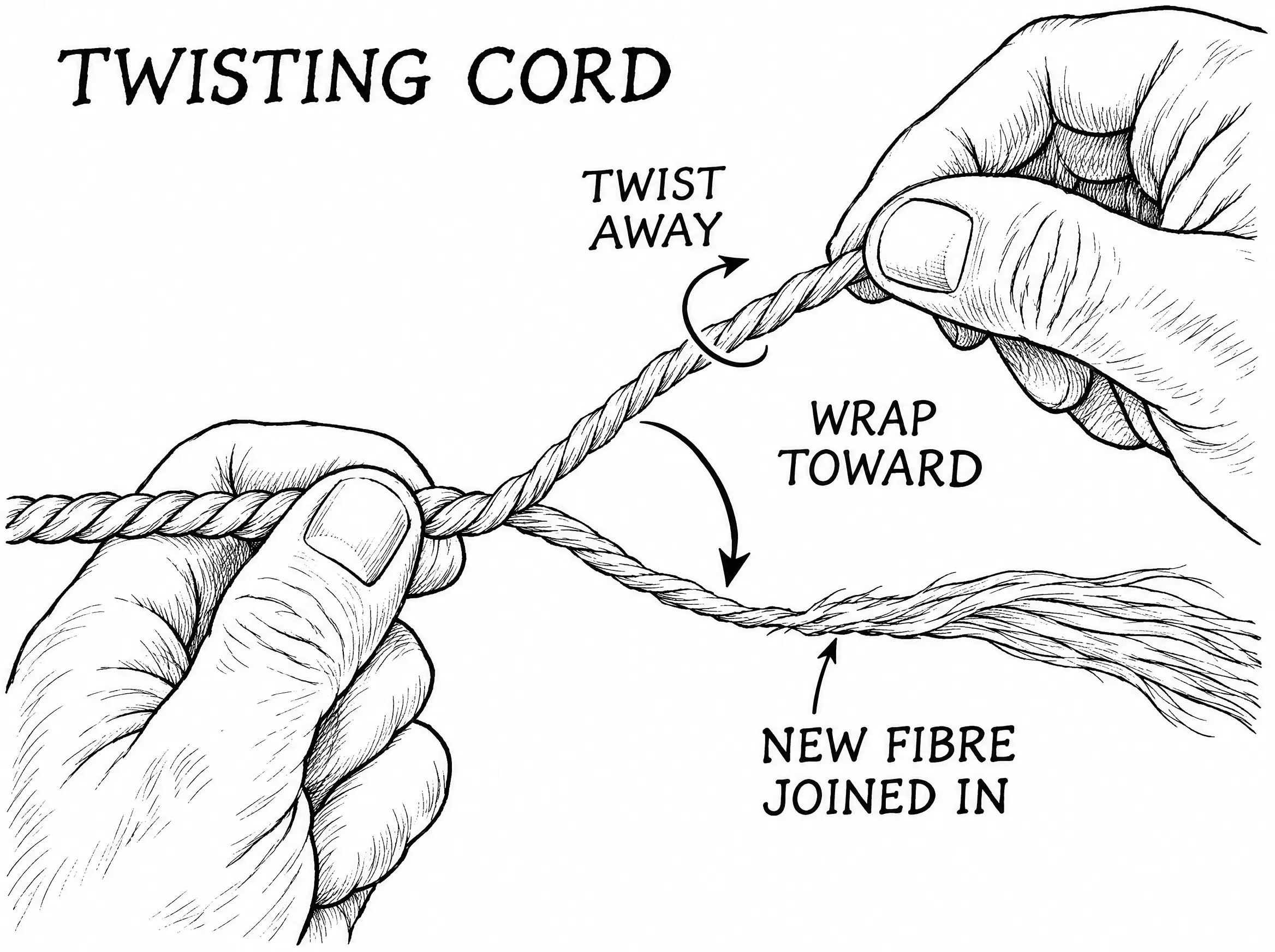
- Twist the far strand tightly away from you.
- Bring that strand over the near strand, toward you. They change places.
- Repeat steps 5 and 6. Each strand is twisted one way and the pair is wrapped the other way, so the cord cannot unwind.
- When one strand gets thin, lay a new bundle of fibre beside it with a finger-length of overlap and keep twisting. Because the legs were unequal, the two joins never fall in the same place.
- Finish with a simple knot. Let the cord dry before loading it.
EIt worked if
- Two people pulling hard on a cord as thick as a grass stem cannot break it.
- When let go, the cord does not untwist.
FWhat goes wrong
- It unwinds. The strand twist and the wrap are going the same way. Twist away, wrap toward.
- It breaks at a join. The overlap was too short, or both strands were joined at one point. Overlap a full finger-length and stagger the joins.
- Brittle fibre. It was worked dry. Keep it damp while twisting.
- Lumpy cord. Uneven bundles. Add a little fibre often instead of a lot at once.
GIn the story
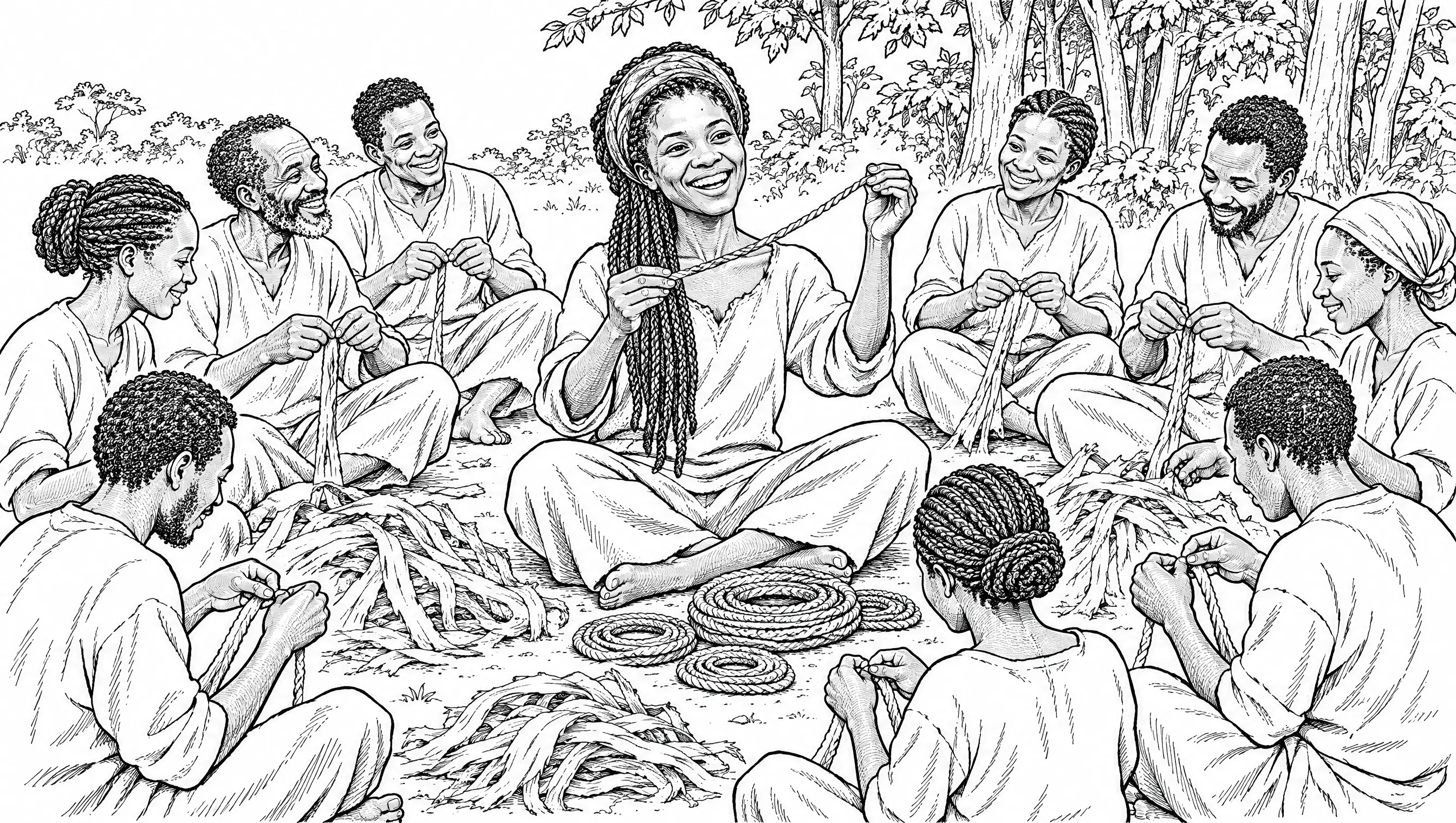
Imani has ten people twisting cord round the dark camp on the first night, before there is a fire to sit by, and teaches them a song whose beat is the twist and the wrap. It becomes the first song of the island.
HFigures