Tally-post calendar
one notch per day, the start of the record
AWhat it needs
Needs 2 other products in all, 1 of them directly.
- 01.23 Tally-post calendarKnowledge Year 1 needs 2 products
- 01.03 Sharp stone flakeMaking Year 1 needs 1 product
- 01.02 HammerstoneMaking Year 1 raw materials only
Open a box to see what it needs. A dashed box is a product already drawn in full: click it to jump there. In the org chart, drag to move around.
BWhy
Without a count, the days run together within a month. The count tells them when the rains come back, when to plant, how long the food must last and when a child is due. It is also the first written record, and the beginning of the Record itself.
CYou need
- A straight post of hard wood, as thick as the upper arm and taller than a person, with the bark off
- A stone flake (01.03)
- A straight stick as long as the forearm, and a handful of pale pebbles
DSteps
- Set the post in a hole knee-deep beside the hearth, where everyone passes it, and ram earth and stones round its foot.
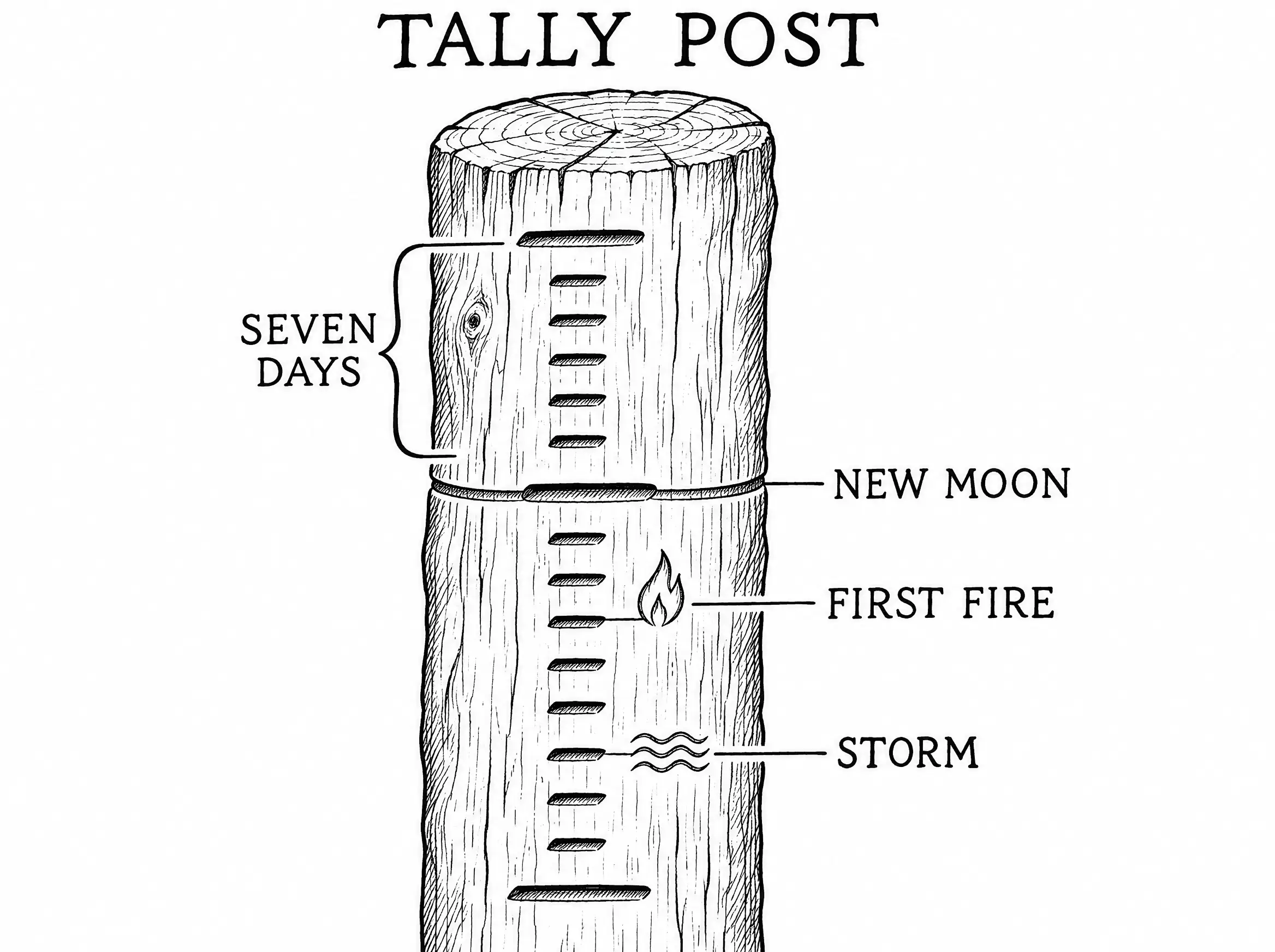
- At each sunrise the keeper cuts one notch a finger-width long, starting at eye height and working downward in a column.
- Make every seventh notch twice as long. Seven days is the gap between councils.
- On the first night of each new moon, cut a ring right round the post beside that day's notch.
- Mark great events with a sign beside their day: a flame for the first fire, a wave for the storm, a small figure for a birth. Agree each sign in council so that everyone can read it.
- When a column reaches the ground, start the next one beside it. One post holds about three years.
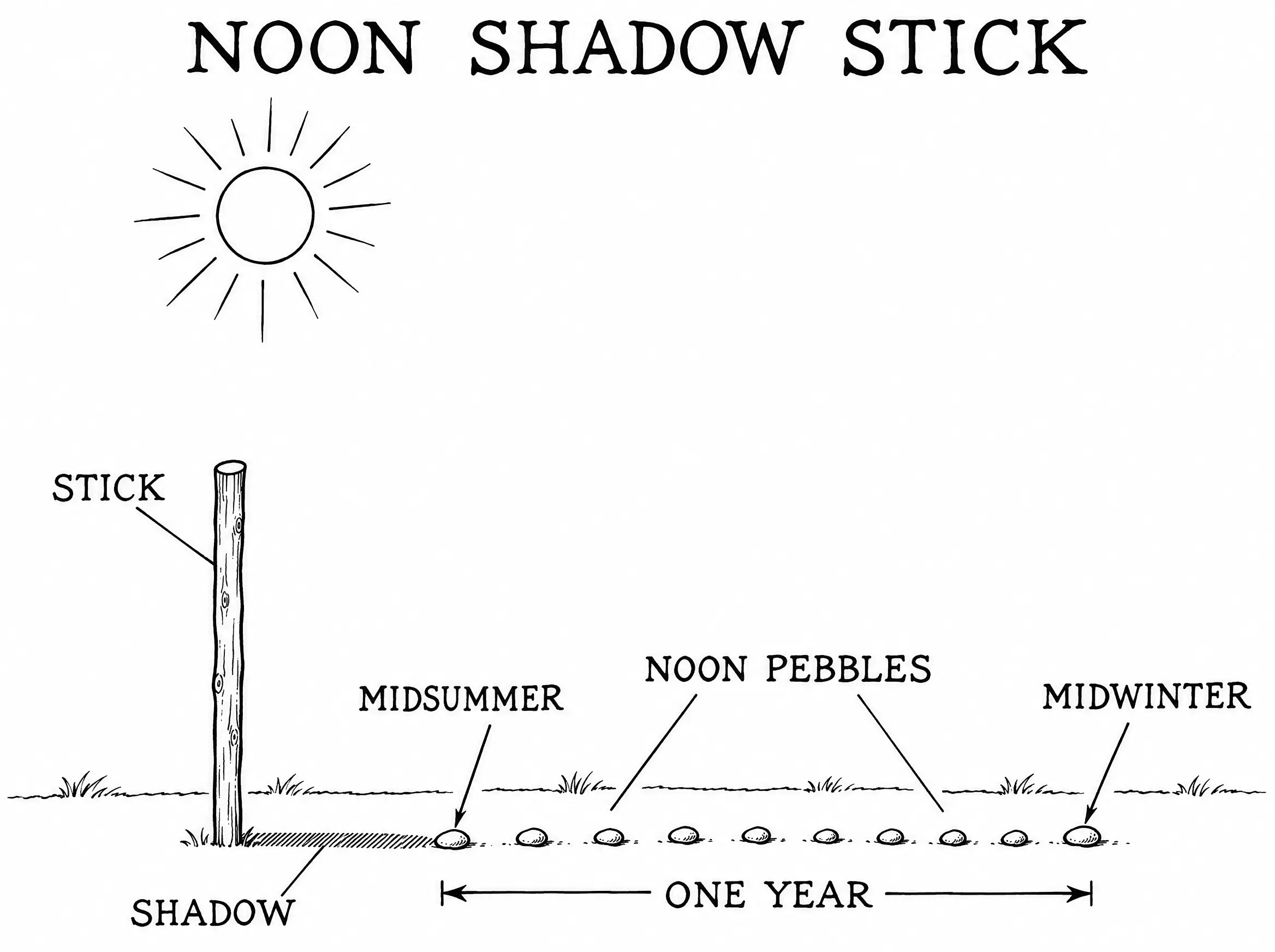
- The noon mark: push the forearm stick upright into level ground. Each day, put a pebble at the tip of its shadow when the shadow is shortest. The pebbles creep in a line through the year and turn back at midsummer and midwinter.
- Mark the sunrise: from the post, note where the sun comes up on the skyline against a tree or a rock. That point also travels and turns back with the seasons.
- Name a second keeper who can take over without a break in the count.
EIt worked if
- Two people, asked separately how many days since the landing, give the same number.
- After a year, the noon pebbles have gone out and come back along the same line.
FWhat goes wrong
- A day is missed, or cut twice. Only the keeper cuts, and always at sunrise. If in doubt, the moon rings will show the slip within a month.
- The post rots at the foot. Char the buried part in the fire before setting it.
- Nobody can read the signs. Too many, or made up by one person. Keep them few and agreed.
GIn the story
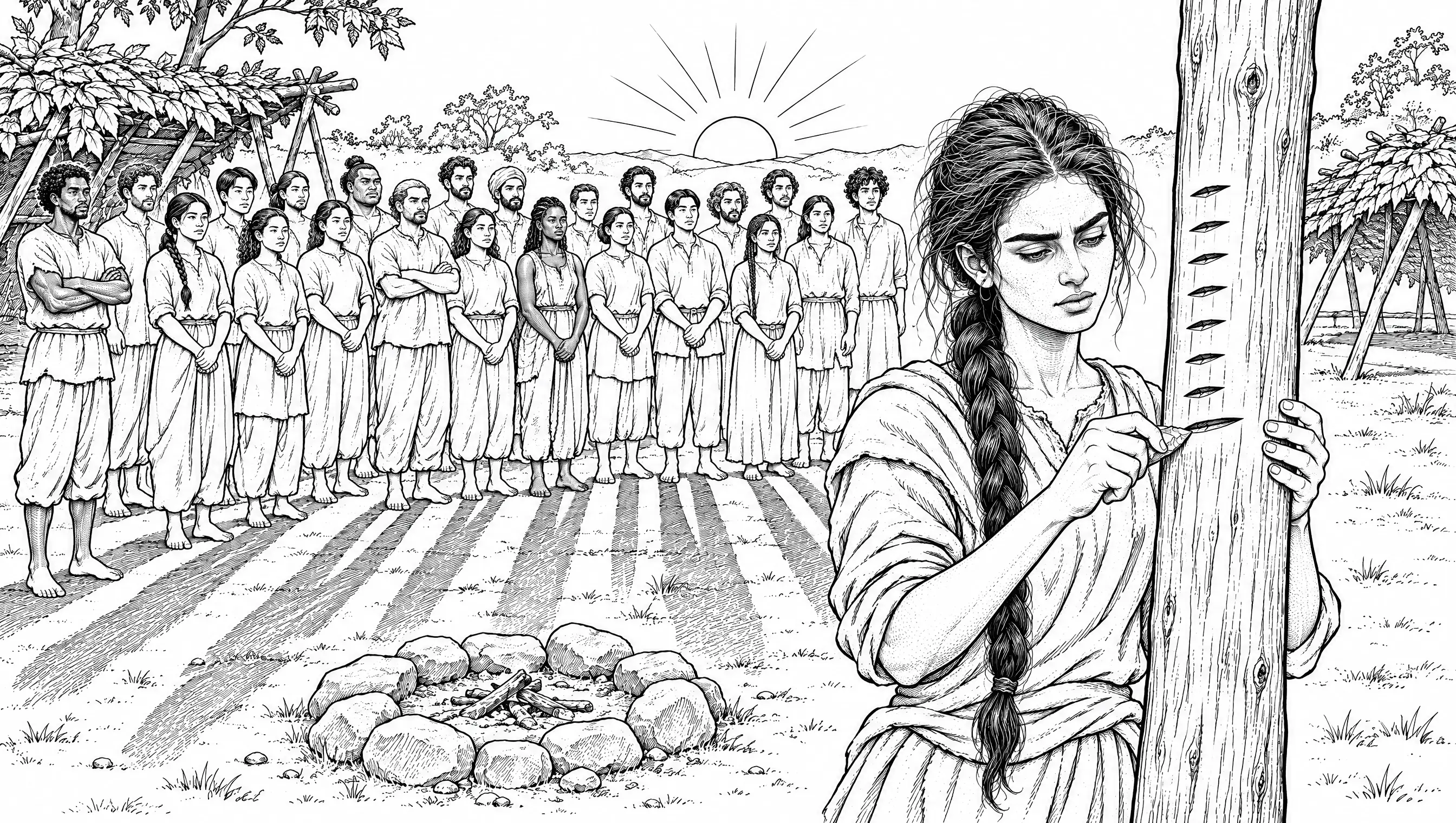
Preet has counted the days in pebbles in her pocket since the landing, telling no one. On the seventh morning she asks Hiro for his best blade, cuts seven notches while the camp watches, and makes the last one long. It is the first time most of them have heard her speak. Adam tells the council that from today she keeps the count, and later, everything else that must not be forgotten.
HFigures